This is the Day to Rejoice
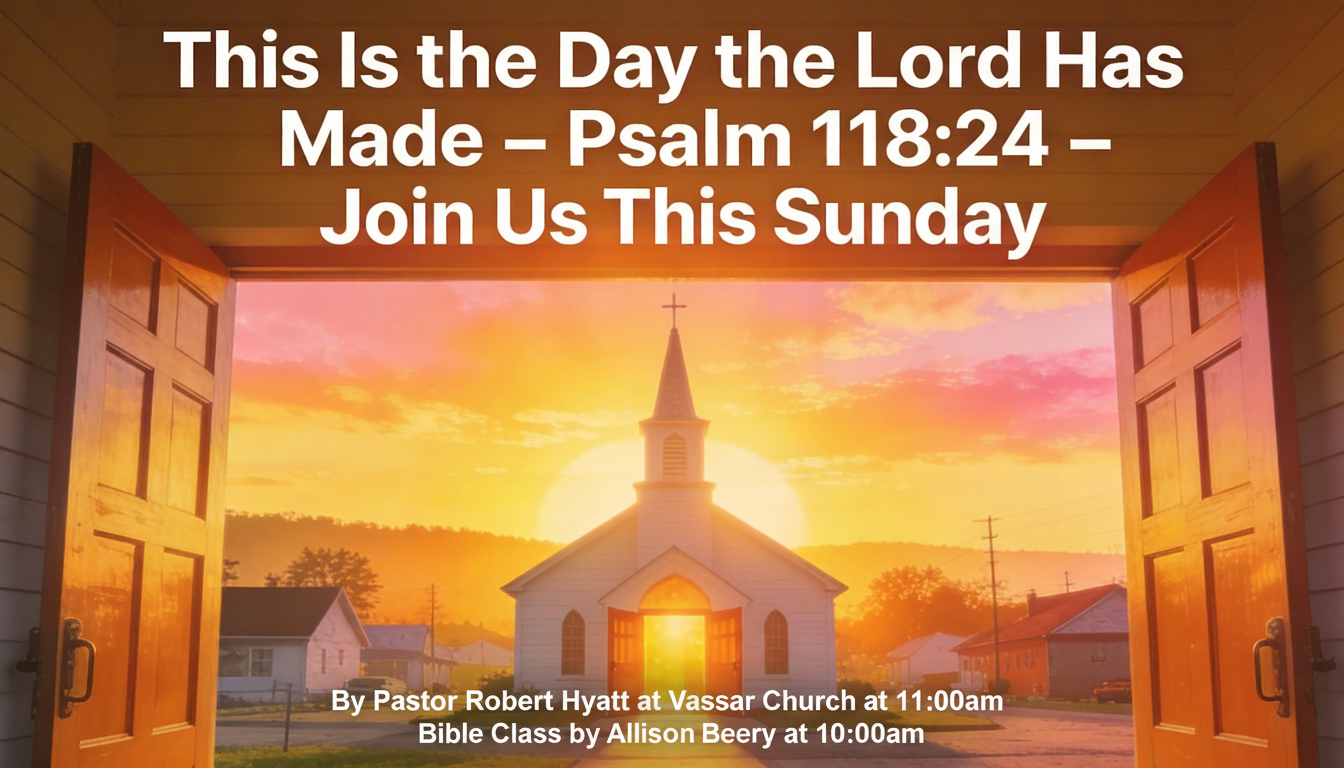
Rejoicing in the Day the Lord Has Made By Pastor Robert Hyatt Sunday February 15, 2026“
This is the day the Lord has made; we will rejoice and be glad in it.” Psalm 118:24 in the New King James Version is not just a pleasant phrase for greeting cards or Sunday church; it is a call to a daily posture of faith. Everyday that dawns is a deliberate creation of God, a day loaded with His intention, His provision, and His mercy. To say, “We will rejoice and be glad in it,” is to make a conscious decision to answer God’s gift of a new day with praise, not complaint; with expectation, not resignation.The New Living Translation renders it, “This is the day the Lord has made.We will rejoice and be glad in it.” Here the focus is on the Lord’s authorshipof the day and our response to that authorship. The day is not owned by the enemy, not defined by our circumstances, and not controlled by ouremotions; the day belongs to the Lord. When we understand that, we stopletting our feelings dictate our worship and begin letting God’s sovereigntyshape our attitude. Faith chooses to rejoice before the breakthrough,because faith knows the Daymaker is already at work within the day Hehas made.The psalmist does not ignore the reality of need or struggle; instead, hebrings it into the presence of God with boldness. “Save now, I pray, O Lord;O Lord, I pray, send now prosperity.” In the NLT we hear, “Please, Lord,please save us. Please, Lord, please give us success.” This is not the voiceof doubt; it is the voice of covenant confidence. The one who rejoices in the day the Lord has made is the same one who cries out for salvation, help, 2and success, believing that God is both willing and able to respond. Real faith rejoices and petitions at the same time—thanking God for the day while asking God to move in the day.“Blessed is he who comes in the name of the Lord! We have blessed youfrom the house of the Lord.” These words in Psalm 118:26 point beyond the psalmist’s own experience and prophetically anticipate the coming ofChrist, who would enter Jerusalem to the cry, “Blessed is he who comes inthe name of the Lord!” When we lift this declaration today, we are aligning our worship with the recognition of Jesus as the center of God’s savingwork. The house of the Lord becomes a place where we pronounce blessing on those who live and move under the name and authority ofJesus. Every time believers gather in worship, we are standing in that samestream of praise, welcoming the King who comes in the name of the Lord.“The Lord is God, and He has given us light; bind the sacrifice with cords tothe horns of the altar.” The NLT says, “The Lord is God, shining upon us.Take the sacrifice and bind it with cords on the altar.” Light speaks of revelation, guidance, and favor—God shining on His people so they can see Him more clearly and walk in His ways. But with light comes a call: bind the sacrifice, tie it down, secure it to the altar. The picture is vivid—no half-hearted offering, no easily withdrawn commitment, but a life deliberately and firmly placed on God’s altar. In our context, that sacrifice is our whole selves—our time, our talents, our treasures, our plans, and our desires. To rejoice in the day the Lord has made is to accept that this day is not ours to use as we please; it is His,and we are His. We take the cords of obedience, devotion, and 3 perseverance, and we bind our lives to His will. When the pressures of life try to pull us off the altar of surrender, we remember that God has given uslight, and we choose again to stay bound to His purpose.Then the psalmist turns from public proclamation to personal confession:“You are my God, and I will praise You; You are my God, I will exalt You.”Here the faith that rejoices in the day and calls on the Lord for salvation becomes a deeply personal relationship. It is not enough to say, “The Lord is God”; the psalmist says, “You are my God.” This is where faith catches fire in the heart—when God is no longer just the God of Israel, the God of the church, or the God of the Bible, but my God, my Savior, my Lord. Out of that relationship flows a determination: “I will praise You… I will exalt You.”Finally, Psalm 118:29 brings the theme of the whole passage to a triumphant conclusion: “Oh, give thanks to the Lord, for He is good! For His mercy endures forever.” The NLT says, “Give thanks to the Lord, for he is good! His faithful love endures forever.” Notice that the psalm does not say,“Give thanks to the Lord, for your situation is good,” but “for He is good.”Our thanksgiving is rooted in God’s character, not in our circumstances. His mercy—His faithful, loyal love—does not fade with the setting sun or disappear when trouble comes; it endures forever. When you stand before God’s people and declare, “This is the day the Lord has made; we will rejoice and be glad in it,” you are inviting them into this entire spiritual reality. You are calling them to see their day—this day—as crafted by the hand of God, covered by the mercy of God, and filled with the presence of God. You are leading them to cry out, “Please, Lord,4 please save us; please, Lord, please give us success,” with the confidence that the One who made the day can move in the day. You are guiding them to bind their lives as living sacrifices to the altar of God’s will, trusting His light, His goodness, and His enduring love. So when this message is proclaimed, let it ring with conviction and joy. Call the people to lift their voices, not because every circumstance feels favorable, but because the Lord has made this day and filled it with His purpose. Urge them to step into the hours ahead with a decision already made in their hearts: “We will rejoice and be glad in it.” Lead them to thealtar of surrender, to the confession “You are my God,” and to a chorus oft hanksgiving that rises over every fear and every obstacle: “Give thanks to the Lord, for He is good! For His mercy endures forever.”